
Home Office Window Treatments to Cut Screen Glare
Working from home has its perks, but a sunny window behind your monitor isn’t one of them. Glare washes out screens, heats up the room and leaves you squinting through video calls. Closing everything fixes the glare but leaves you working in a cave, and natural light is one of the best things about a home office.
The goal is a workspace with plenty of daylight and no glare. Here’s how to get there.
Start with where the light comes from
Before choosing a product, look at where the window is relative to your desk:
- Window behind your screen: The bright window competes with your monitor, causing eye strain.
- Window behind you: Sun reflects off the screen, and you’re backlit on video calls.
- Window to the side: Usually the best setup. Soft, even light without reflections.
If you can move the desk, start there. If you can’t, the right window treatment does the work.
Know your sun
The direction your office faces changes everything:
- East: bright mornings, then easy afternoons.
- West: calm mornings, then strong, low afternoon sun right at screen height.
- South: steady light most of the day, lower and deeper in winter.
- North: soft, even light with little glare.
Designer tip: West-facing offices are the toughest. The afternoon sun comes in low and straight at eye level, right when the afternoon meetings start.
Best choices for home offices
Solar screen shades
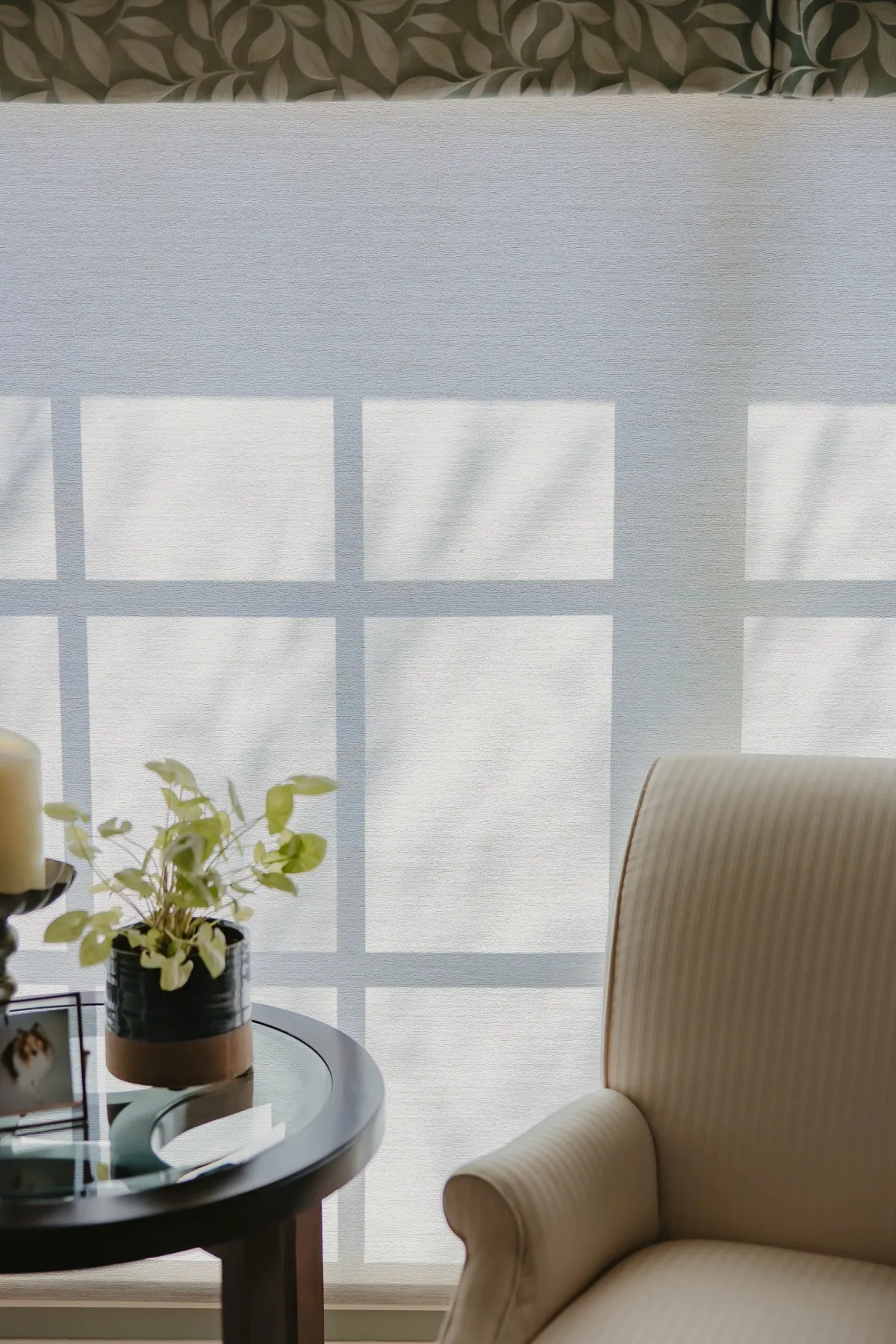
Designer Screen Shades are made for this. Screen fabrics cut glare and heat while keeping a view outside. Tighter weaves reduce more glare; more open weaves keep more of the view. Your designer can help you balance the two for your desk.
Sheer shadings
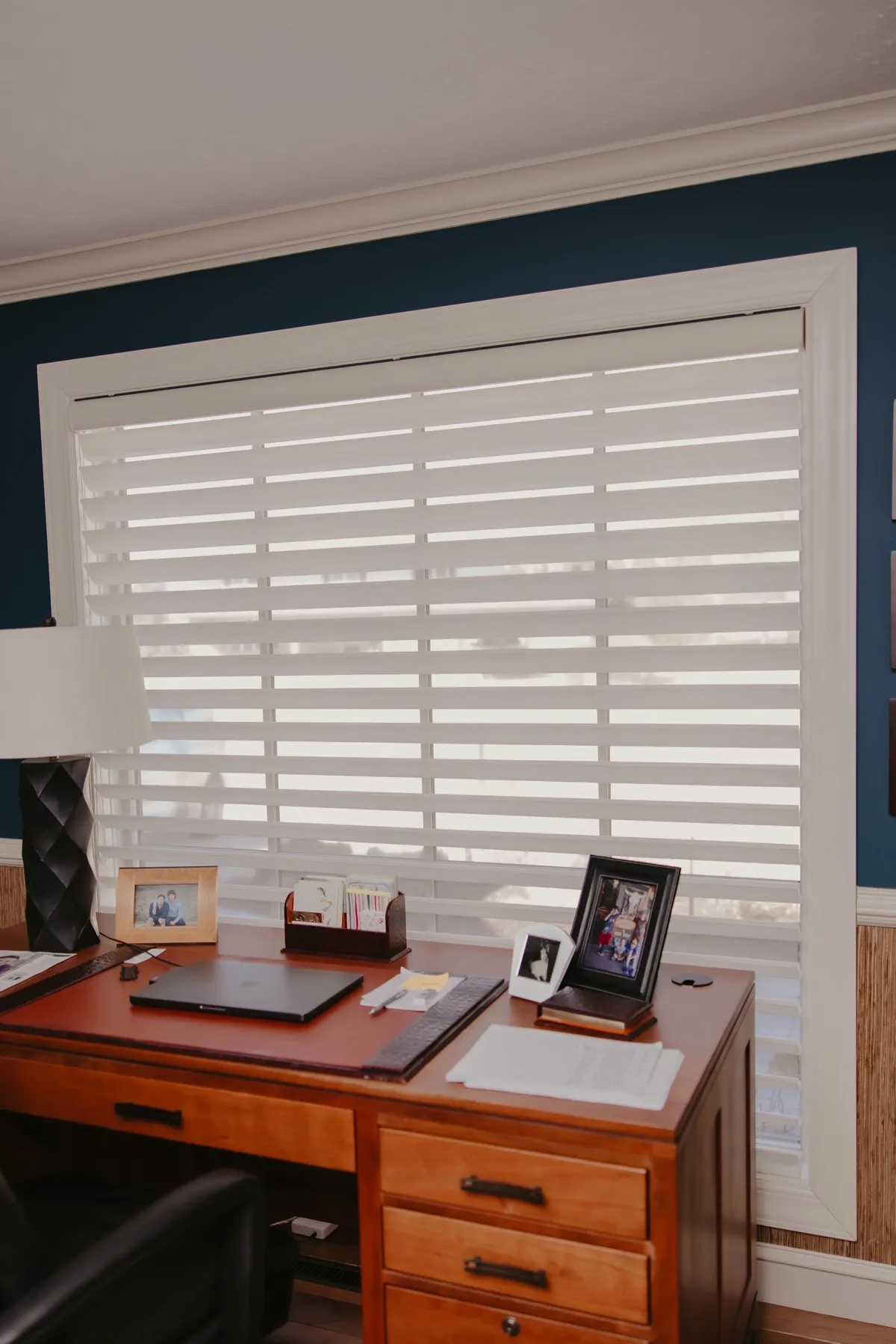
Silhouette® Window Shadings and Pirouette® Window Shadings diffuse sunlight into a soft glow, and tilting the vanes lets you fine-tune light through the day. The office in the cover photo, part of this classic brick home, uses a Pirouette shade above the desk.
Top-Down/Bottom-Up shades
Lower the shade from the top to bring daylight in above your screen while blocking light at eye level. It’s a simple, effective answer for many offices. More in our Top-Down/Bottom-Up guide.
Blinds and shutters
Tilt blind slats or shutter louvers upward to bounce light toward the ceiling, which spreads it softly around the room instead of straight onto your desk.
Roller shades
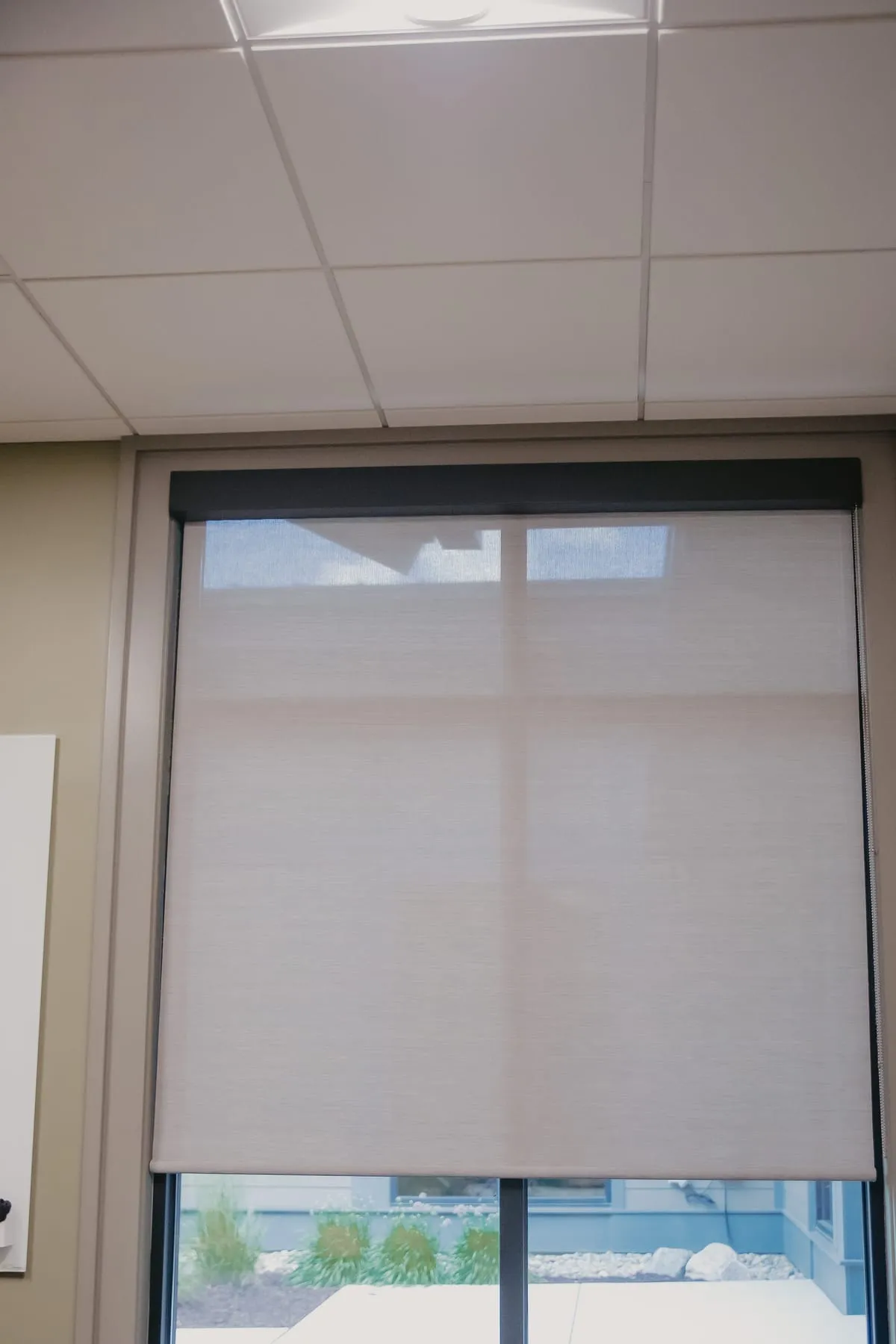
A light-filtering roller shade is a clean, simple option that suits modern offices and evens out bright light.
Look better on video calls
Soft, diffused light in front of you is the most flattering. A sheer or light-filtering shade on a window you face turns harsh sun into even, natural light. If the window is behind you, lowering a shade keeps you from becoming a silhouette.
Keep the office comfortable
Glare often comes with heat. A small office with a sunny window can get warm by mid-afternoon. Screen fabrics and cellular shades both help keep the room comfortable, and cellular shades add insulation on cold mornings too.
Automate the afternoon sun
If the sun hits your office at the same time every day, PowerView® Automation can lower your shades on a schedule, so you never have to stop mid-meeting to adjust them. A scene can also set every shade in the room with one tap when you sit down to work.
Get a recommendation for your workspace
Every office faces a different direction and sun angle, and the right fabric depends on how much view you want to keep. During a free in-home consultation, your designer can hold screen and sheer samples up to the window right at your desk, so you can see the difference on your own monitor.
Common questions
What is the best window treatment to reduce glare on a computer screen?
Solar screen shades are made for it: they cut glare and heat while keeping a view outside. Sheer shadings and Top-Down/Bottom-Up shades are also good choices.
Where should my desk be in relation to the window?
Usually beside the window, so daylight comes from the side. A window behind your screen causes eye strain, and a window behind you causes reflections and backlighting on video calls.
How can I look better on video calls?
Soft, diffused light in front of you is the most flattering. A sheer or light-filtering shade on a window you face spreads daylight evenly across your face.
Can shades adjust automatically when the sun hits my office?
Yes. With PowerView® Automation, shades can lower on a schedule at the time of day the sun reaches your desk.