
How to Layer Drapery and Shades
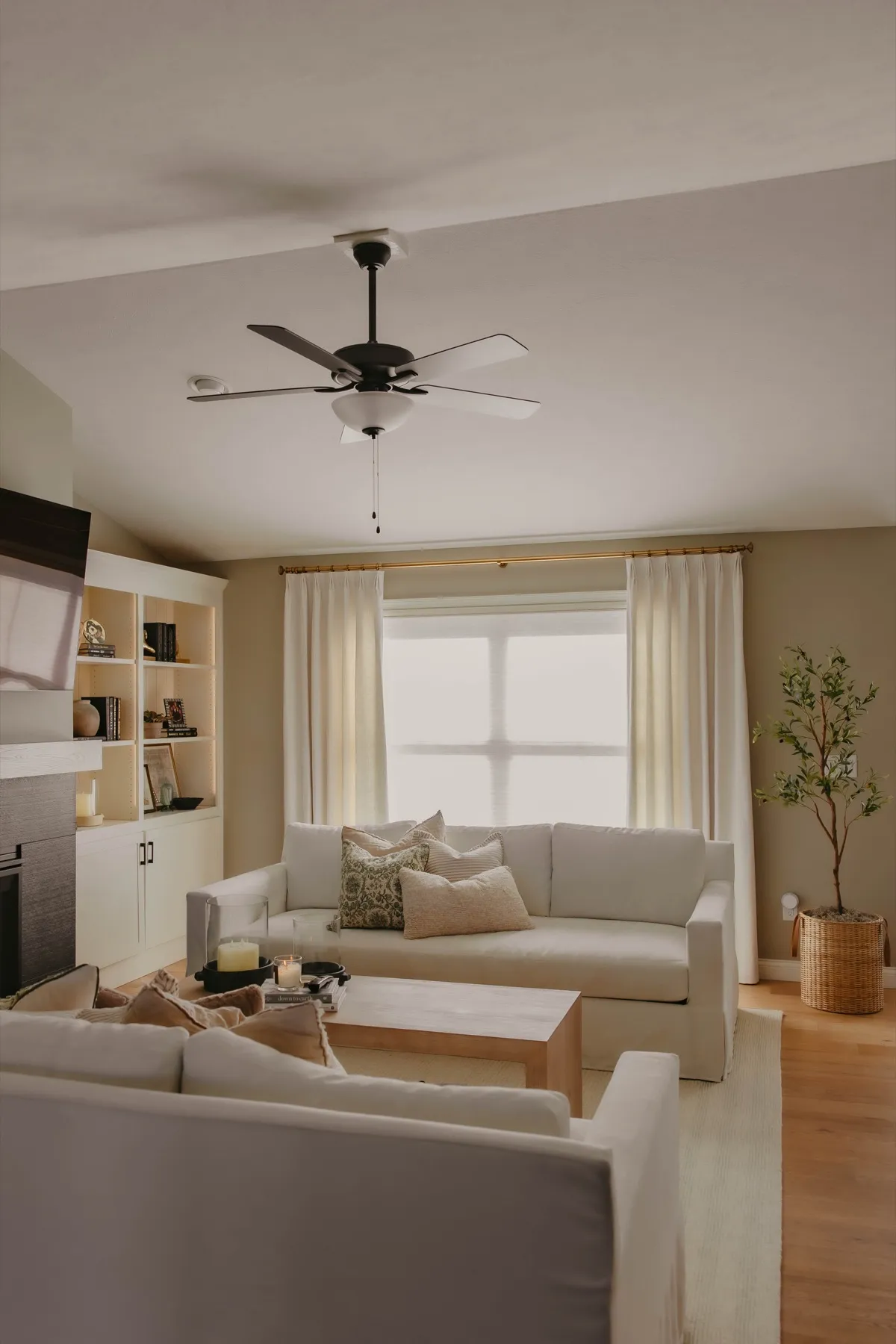
Some of the most finished-looking rooms we design use two layers at the window: a shade or blind that handles light and privacy, and drapery that brings softness, color and pattern. Layering isn’t only about looks, though. It also gives you more control over light, privacy and comfort through the day and the seasons.
Why layer?
- Light control. The shade handles daily light and privacy. Drapery closes over it at night for extra darkness.
- Comfort. Two layers add insulation at the window, which you’ll appreciate during a Midwest January.
- Style. Drapery adds color, pattern and height, and frames the window like a picture.
- Flexibility. Leave the drapery open as a decorative frame, close it for movie night, and use the shade day to day.
- Sound. Fabric softens echoes in rooms with hard floors and high ceilings.
Combinations that work
Cellular shades + drapery
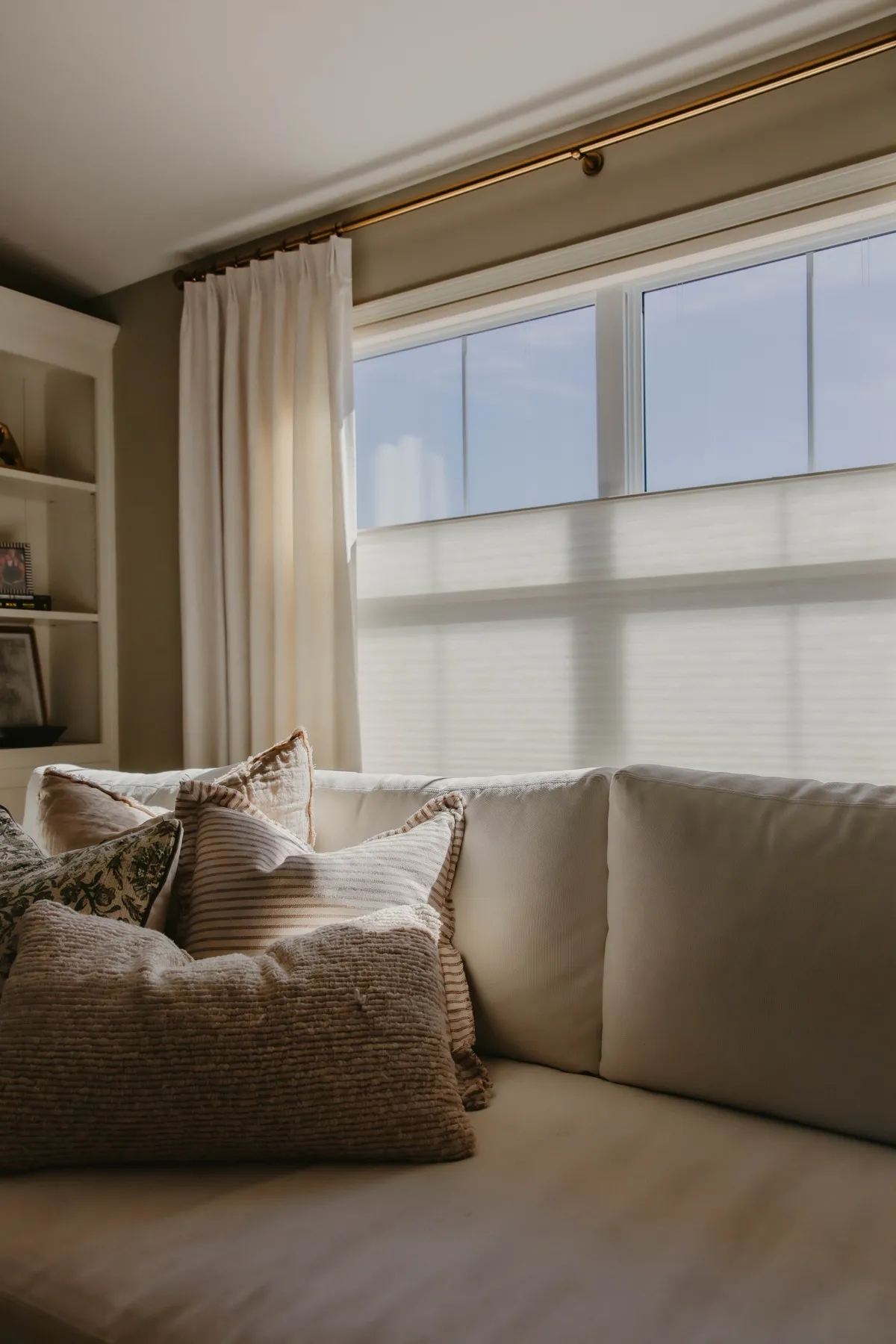
A cellular shade inside the window frame adds insulation and privacy, while drapery on the wall softens the room. This is our go-to for bedrooms, especially with a room-darkening shade. See bedroom window treatments for better sleep.
Woven wood shades + linen drapery
Woven wood shades bring natural texture, and soft linen panels on either side create a relaxed, collected look in living and dining rooms.
Roman shades + side panels
Roman shades in a solid fabric pair beautifully with patterned side panels, or the reverse: a patterned Roman shade with solid drapery.
Roller or screen shades + sheer drapery
A clean roller or screen shade cuts glare, and sheer drapery adds movement and softness. It’s a perfect match for modern rooms, where it keeps a minimal look from feeling cold.
Shutters + drapery
Even shutters can be layered. A pair of drapery panels softens the crisp lines of white shutters in a dining room or bedroom.
Sheer shadings + drapery
Soft shadings like Silhouette® Window Shadings already have a gentle look. Add drapery for formal living and dining rooms where you want a little more presence.
Tips from our designers
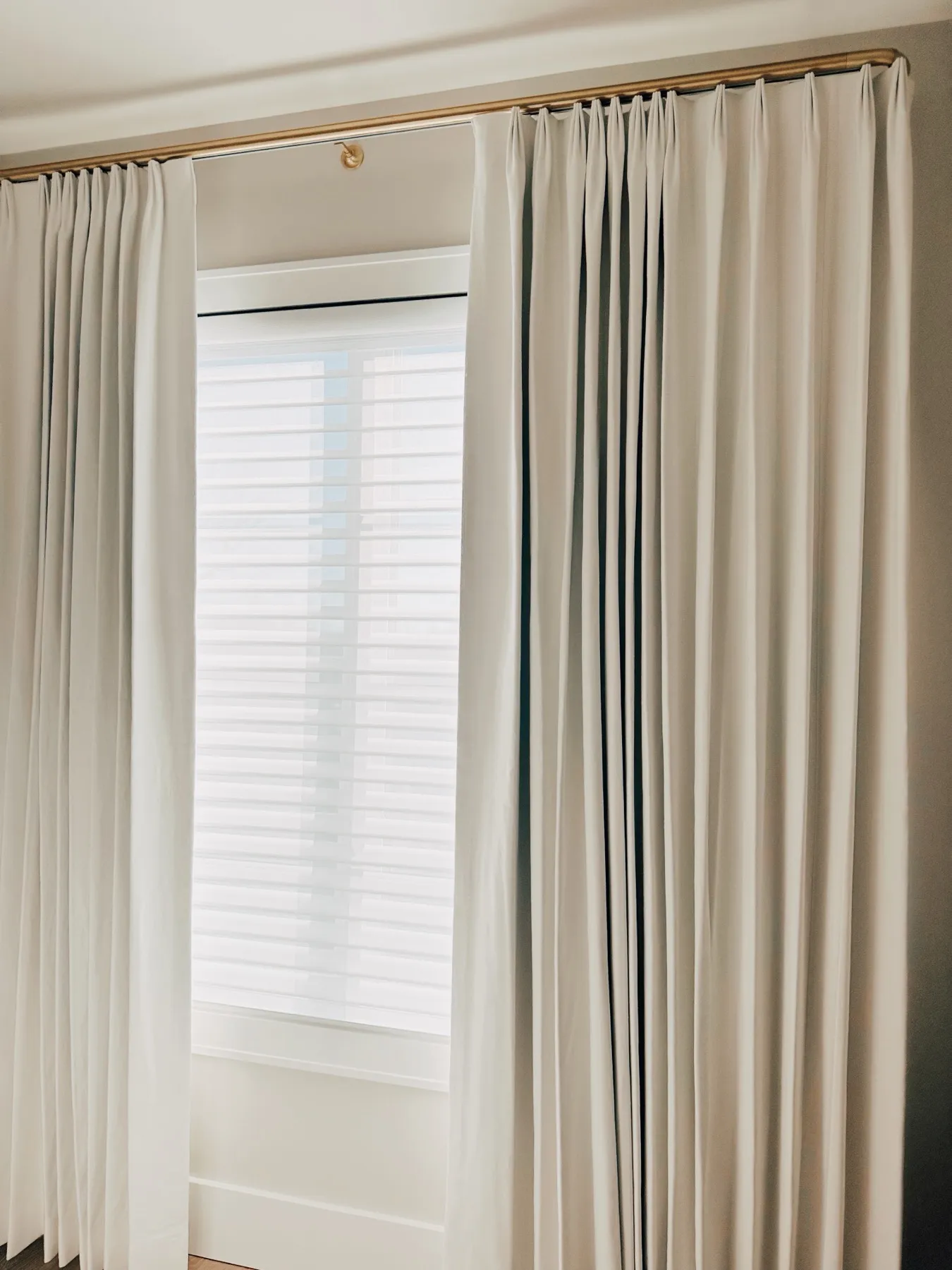
- Mount drapery high and wide. Hanging the rod well above the window frame and extending it past the sides makes the window look bigger and lets drapery stack off the glass, so you don’t lose daylight.
- Let one layer lead. If the drapery has a bold pattern, keep the shade simple, and vice versa.
- Watch the length. Panels that just kiss the floor look tailored. A slight break looks relaxed. Puddled drapery is dramatic but harder to keep clean.
- Match the hardware to the room. Rods, rings and finials are part of the design. Brass, black, wood and painted finishes all set a different mood.
- Think about how you’ll use it. If you plan to open and close drapery every day, choose functional panels on a smooth track, or motorized drapery.
Designer tip: Choose the shade first. It does the daily work. Then choose drapery that complements it, so the two feel planned together instead of added later.
Real examples
- In this neutral family home, ivory panels on brass rods hang over light-filtering shades, and patterned green draperies dress the bedroom.
- In a historic home, pinch-pleat draperies frame tall arched windows below original woodwork.
- In Peoria, pleated draperies frame windows that also have shades.
Custom drapery made for your windows
Custom drapery is made to your measurements and fabric choice, from relaxed linen panels to tailored pleats, and can be paired with PowerView® motorized hardware for tall or wide windows.
Plan your layers with samples in hand
Layering is much easier to judge when you can hold shade and drapery fabrics together against your walls and floors. During a free in-home consultation, your designer brings both, so the whole window comes together at once.
Common questions
Should drapery go over shades or blinds?
Yes, layering drapery over a shade or blind is one of the most common designer looks. The shade handles everyday light and privacy, and the drapery adds softness, color and extra darkness when closed.
How high should drapery be hung?
Usually above the window frame, often closer to the ceiling, with the rod extending past the sides. This makes the window look taller and wider and lets the panels stack off the glass.
Can drapery be motorized?
Yes. Motorized drapery tracks open and close panels with a remote, the app or a schedule, which is especially helpful on tall windows and wide walls of glass.
Do decorative side panels need to close?
No. Many layered looks use stationary side panels that frame the window while the shade does the work. Functional panels that close are better when you want extra darkness or warmth.