
Bedroom Window Treatments for Better Sleep
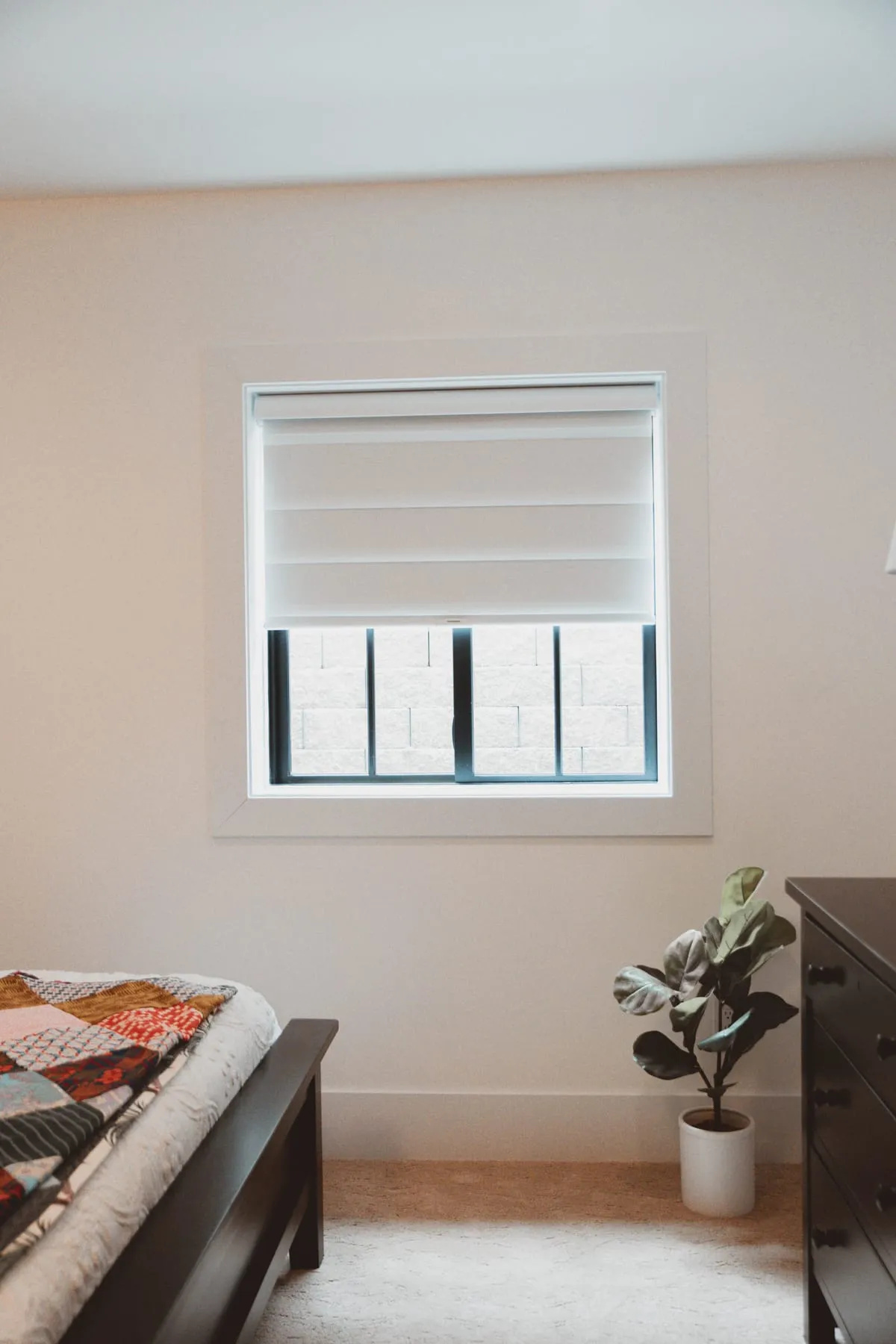
A bedroom asks more of its window treatments than any other room in the house. You want soft daylight on a slow Saturday morning, real darkness when the sun comes up at 5:30 in June, privacy every night, and a window that doesn’t send a chill across the room in January. One well-chosen shade, sometimes with a second layer, can handle all of it.
Here’s how we help clients across Central Illinois and Chicagoland plan bedrooms that sleep better.
Start with how dark you really want it
Not everyone needs a pitch-black room, and the darkest option isn’t always the best one. Think about who sleeps there and when:
- Light sleepers, nurseries and shift workers usually want the darkest option available, with the light gaps at the edges closed too.
- Most primary bedrooms do well with a room-darkening fabric. It blocks most light and gives full privacy at night, while still letting a hint of morning in around the edges.
- Kids’ rooms often need two moods: bright for play during the day, dark for bedtime and naps.
- Guest rooms that are rarely used can often get by with a light-filtering fabric, or a lining or second layer for guests who like it dark.
If the terms are new to you, our guide to light-filtering, room-darkening and blackout explains exactly what each one means.
The edges matter as much as the fabric
This surprises a lot of people. You can choose the darkest fabric made and still wake up to a bright line of sun along the sides of the window. That’s because a shade mounted inside the window frame needs a small clearance at each side to move freely.
There are three good ways to deal with it:
- Mount the shade outside the frame so it overlaps the opening on every side. Our guide to inside vs. outside mount covers the tradeoffs.
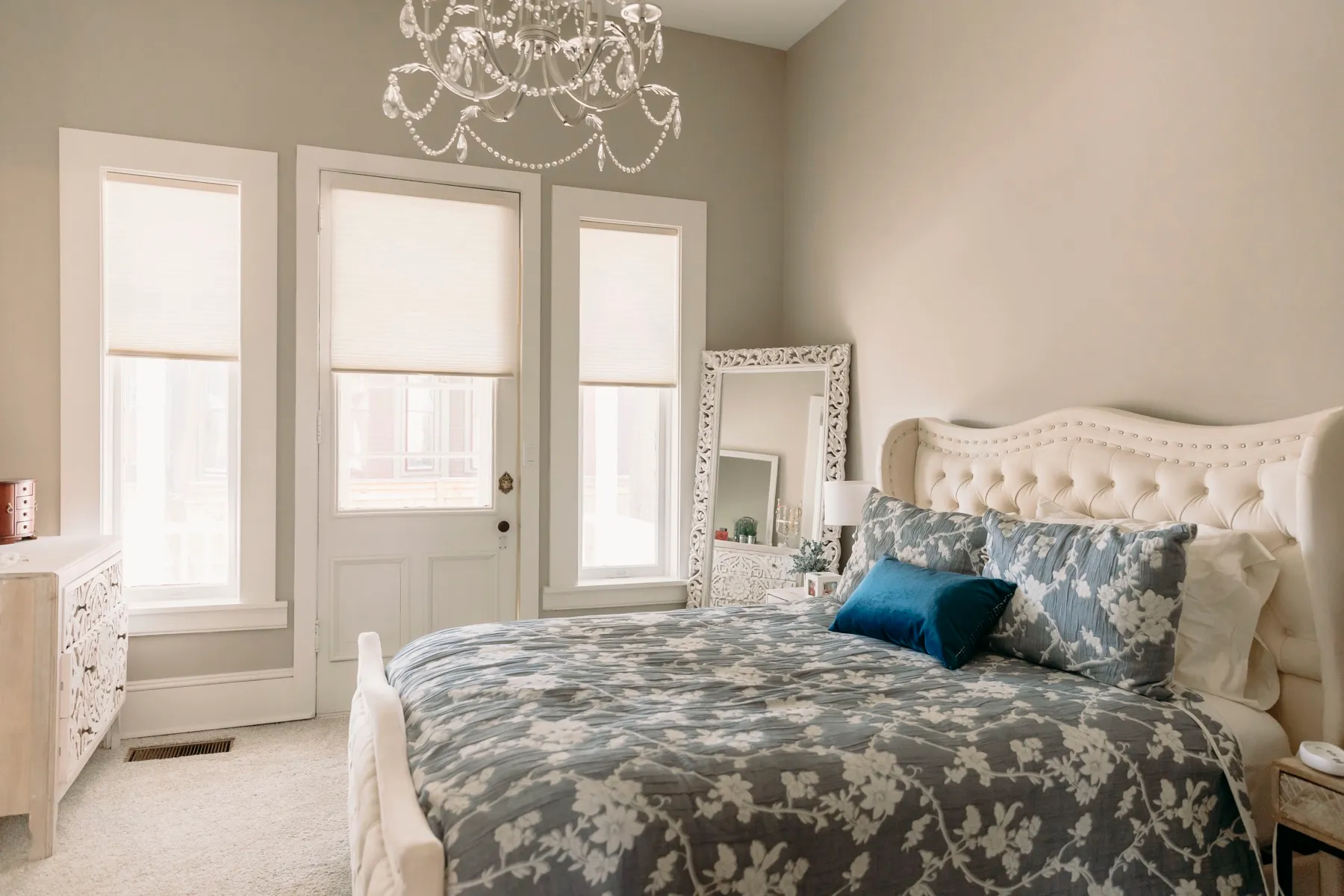
- Choose a shade with side channels. Duette® Honeycomb Shades with the LightLock® system have channels that blend into the window frame and block light from sneaking around the edges.
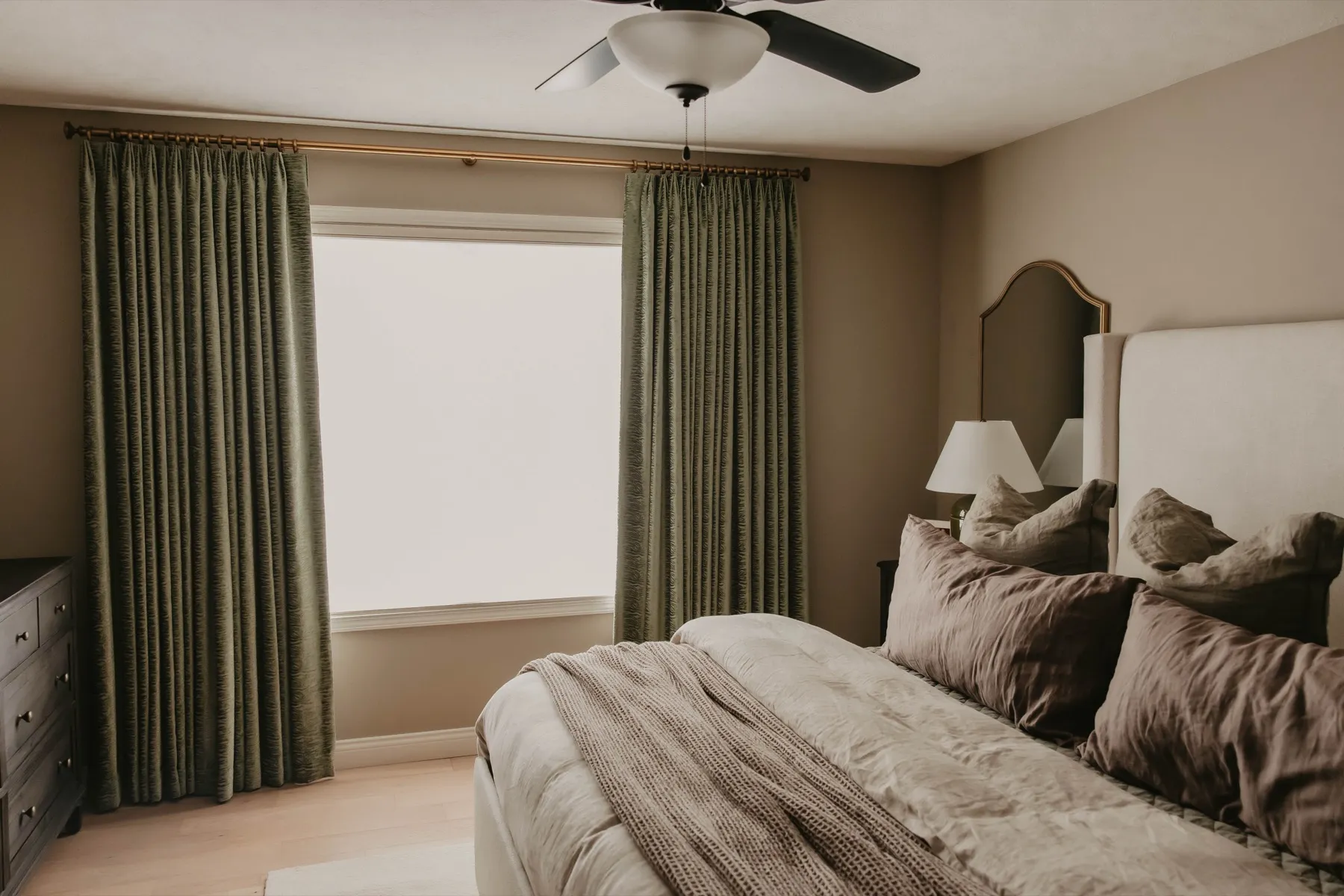
- Layer drapery over the shade. Panels that close over the window cover the gaps and add softness to the room.
Designer tip: If you’re a light sleeper, hold the fabric sample up to your bedroom window at the time of day that bothers you most. Early-morning east light and a streetlight at midnight are very different problems.
Bedroom favorites
Cellular shades
Cellular shades are the most popular bedroom choice we install, and for good reason. Room-darkening fabrics block light, the honeycomb cells trap air to help insulate the window on cold Illinois nights, and they soften outside noise a little too. Top-Down/Bottom-Up lift lets you lower the top of the shade for morning light while the lower half stays private.
Soft shadings with a darkening layer
If you love the soft, fabric-vane look of Silhouette® Window Shadings or Pirouette® Window Shadings in your living room, you don’t have to give it up in the bedroom. Pirouette shadings come in room-darkening fabrics. Silhouette Duolite® adds a room-darkening roller shade behind the sheer shading in the same headrail, so you get a soft glow by day and real darkness at night.
Roman shades
Roman shades bring the tailored softness of fabric to a bedroom. Vignette® Modern Roman Shades come in room-darkening fabrics and have no exposed cords on the back, which makes them a lovely choice for a primary suite.
Roller shades
Designer Roller Shades are simple, clean and available in blackout fabrics. They tuck neatly into the window and work well behind drapery.
Layer for the best of both
Drapery over a shade is the most complete answer for a bedroom. The shade handles everyday light and privacy. The drapery closes at night for extra darkness and warmth, and it frames the bed wall beautifully the rest of the time. We cover the details in How to Layer Drapery and Shades, and you can see a finished example in this family home with soft draperies.
Make mornings easier
The window behind the nightstand is often the hardest one to reach. With PowerView® Automation, bedroom shades can open slowly at the time your alarm goes off, close on their own at sunset and lower from a remote without getting out of bed. There are no cords to tangle, which matters in kids’ rooms and nurseries.
Don’t forget the rest of the room
- Think about the bathroom too. A primary bath next to the bedroom often wants Top-Down/Bottom-Up shades for privacy with daylight. See our kitchen and bathroom guide.
- Keep it consistent. Matching the bedroom shades to the rest of the upstairs keeps the outside of the house looking tidy from the street.
- Plan for heat. West-facing bedrooms can get warm on summer afternoons. Cellular shades or a schedule that lowers the shades after lunch help keep them comfortable at bedtime.
Try samples in your own bedroom
Darkness is impossible to judge from a photo or a showroom display. During a free in-home consultation, your designer brings room-darkening and blackout samples so you can see how each one looks in your own bedroom light. You can also see bedroom shades in person at our showrooms in Champaign, Normal and Orland Park.
Common questions
What is the darkest window treatment for a bedroom?
A room-darkening or blackout fabric that also closes the light gaps around the edges. An outside-mounted shade, a shade with side channels such as Duette® shades with LightLock®, or drapery layered over a shade all get a bedroom very dark.
Are cellular shades good for bedrooms?
Yes. They come in room-darkening fabrics, help insulate the window on cold nights, and can be ordered with Top-Down/Bottom-Up lift for morning light with privacy.
Do I need blackout shades in a nursery?
Many parents choose the darkest option for nurseries so naps aren't cut short by daylight. Pair it with cordless or motorized operation so there are no cords near the crib.
Can bedroom shades open automatically in the morning?
Yes. With PowerView® Automation, shades can rise at a set time, close at sunset and be controlled from a remote, your phone or your voice.