
Light-Filtering vs. Room-Darkening vs. Blackout Shades
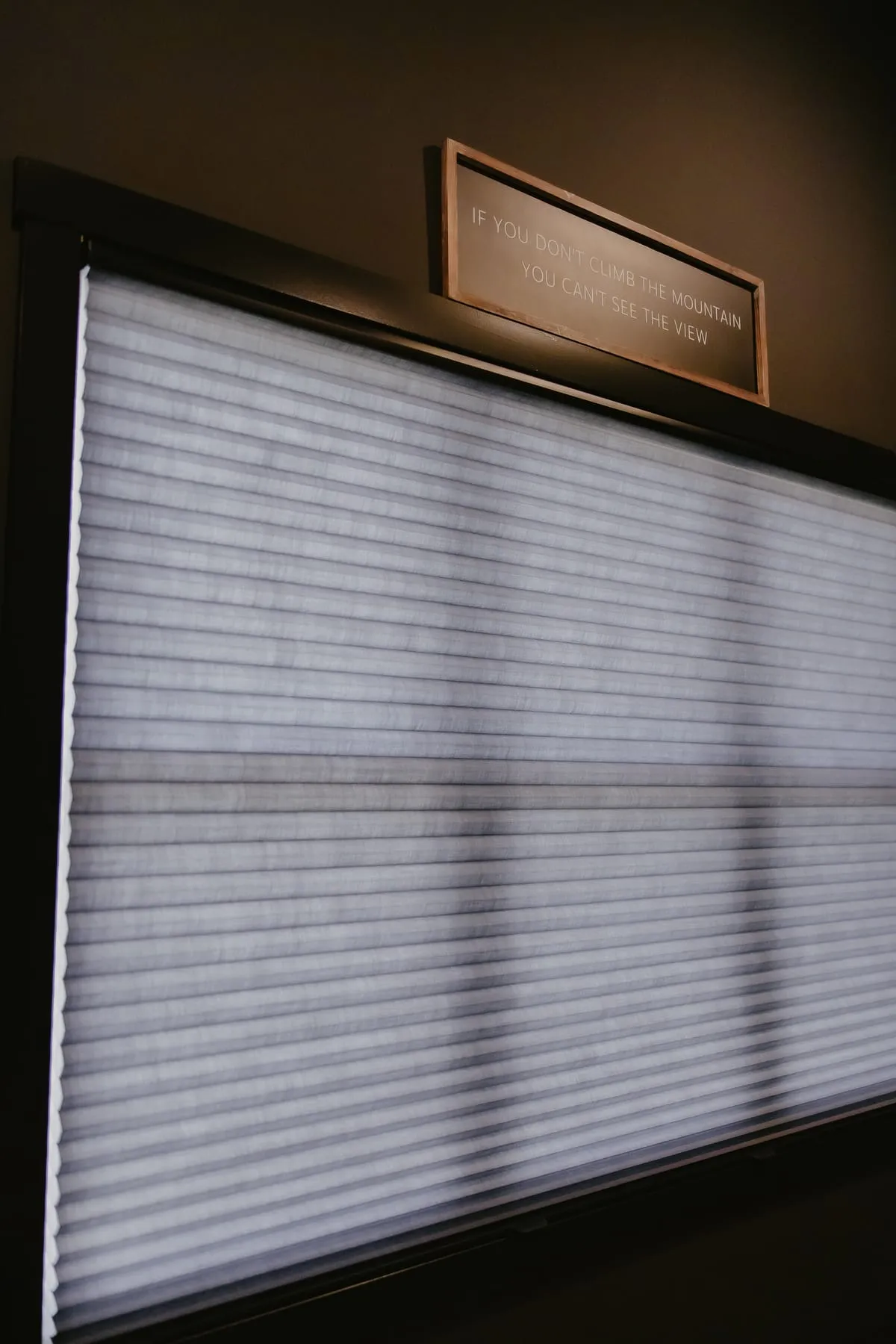
Pick up any fabric sample for a shade and you’ll find one of a handful of words on the label: sheer, light-filtering, room-darkening or blackout. They describe how much daylight comes through the fabric when the shade is down, and they’re one of the most important choices you’ll make for every room in your home.
The tricky part is that these words describe the fabric, not the room. How dark a room actually gets also depends on the direction the window faces, how the shade is mounted and what’s around it. Here’s what each term really means once the shade is on your window.
Sheer and semi-sheer
Sheer fabrics soften daylight, cut harsh glare and keep your view of the yard. They give a room a bright, airy feel, which is why they’re so popular in living rooms, dining rooms and kitchens.
What they don’t do on their own is give privacy at night. When the lights are on inside, people outside can see in.
That’s why sheer fabric is often paired with something else. Silhouette® Window Shadings suspend soft fabric vanes between two sheer facings: tilt the vanes open for a softened view, or close them for privacy. Luminette® Privacy Sheers do the same on sliding doors and wide windows.
Light-filtering
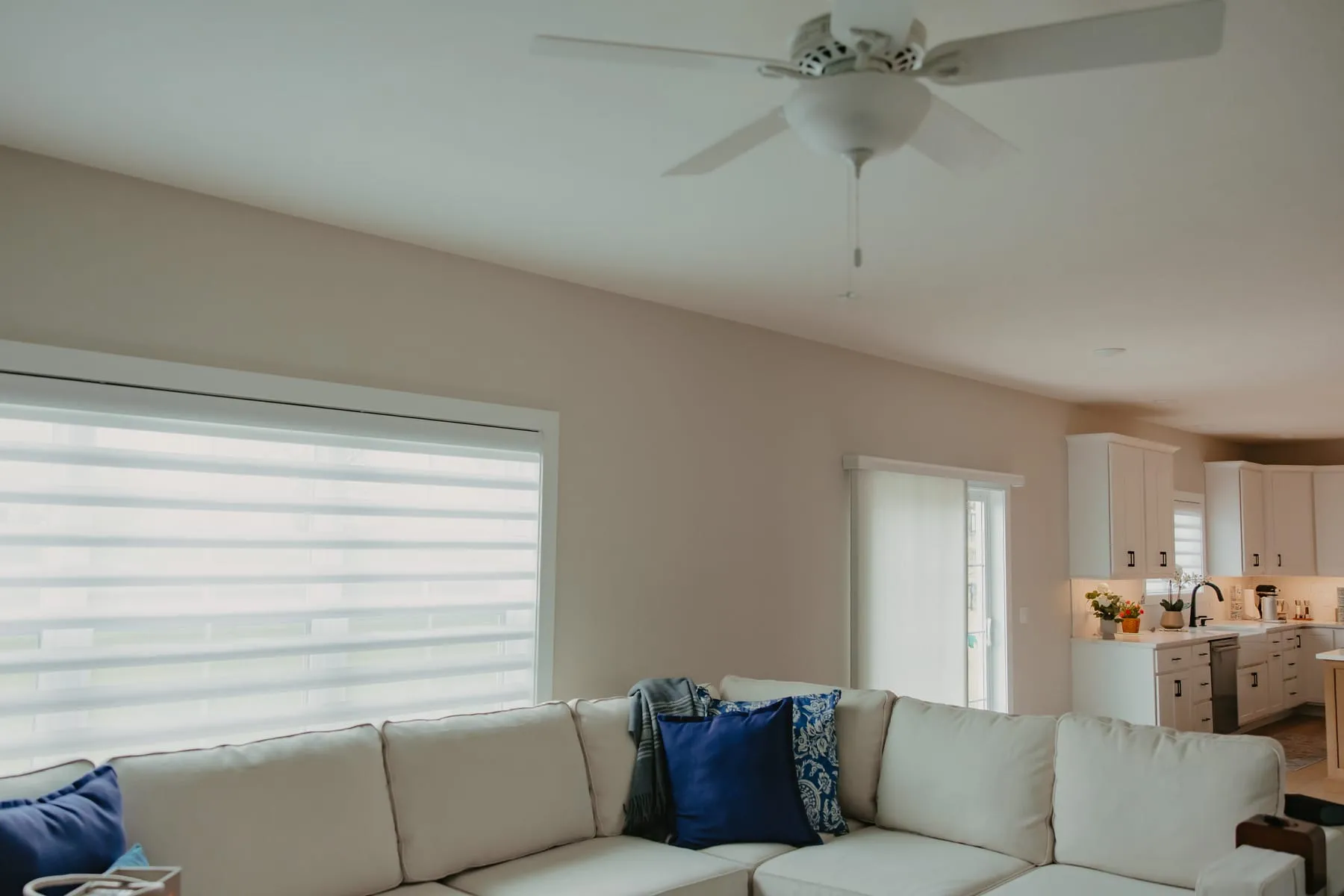
Light-filtering fabric lets daylight in as a soft, even glow while blocking the view into your home during the day. The room stays bright, but you can’t see clearly through the fabric. It’s the most popular choice for the rooms you spend your days in: living rooms, family rooms, dining rooms, kitchens and home offices.
Light-filtering fabrics come in a huge range of colors and textures. Lighter colors let in more light; deeper colors give a richer glow and a bit more privacy.
Room-darkening
Room-darkening fabric blocks most of the light that hits it. The room becomes dim enough for a nap, a movie or a late morning. It’s the usual pick for bedrooms, nurseries and media rooms.
Keep in mind that a shade mounted inside the window frame needs a small clearance at each side. A little light will show around the edges, which some people don’t notice and others find bothers them.
Blackout
Blackout fabric blocks light through the fabric itself. On its own it gives the darkest result, but the same edge gaps apply. For the darkest room possible:
- Mount the shade outside the window frame so it overlaps the opening. See inside vs. outside mount.
- Choose a shade with side channels, like the LightLock® option for Duette® Honeycomb Shades.
- Layer drapery over the shade to cover the edges.
Designer tip: Take your fabric samples to the window at the time of day that matters most. A north-facing bedroom and an east-facing one at sunrise can need completely different fabrics.
Screen fabrics: a special case
Solar screen fabrics work differently from the rest. They’re woven to cut glare and heat while keeping a view outside, so they’re wonderful in sunrooms, offices and rooms with a view you don’t want to cover. Designer Screen Shades come in different openness levels: tighter weaves cut more glare, more open weaves keep more of the view.
The catch is the same as sheers: at night with lights on inside, people outside can see in. Screen shades are often paired with a second shade or drapery in rooms where night privacy matters.
You don’t always have to choose
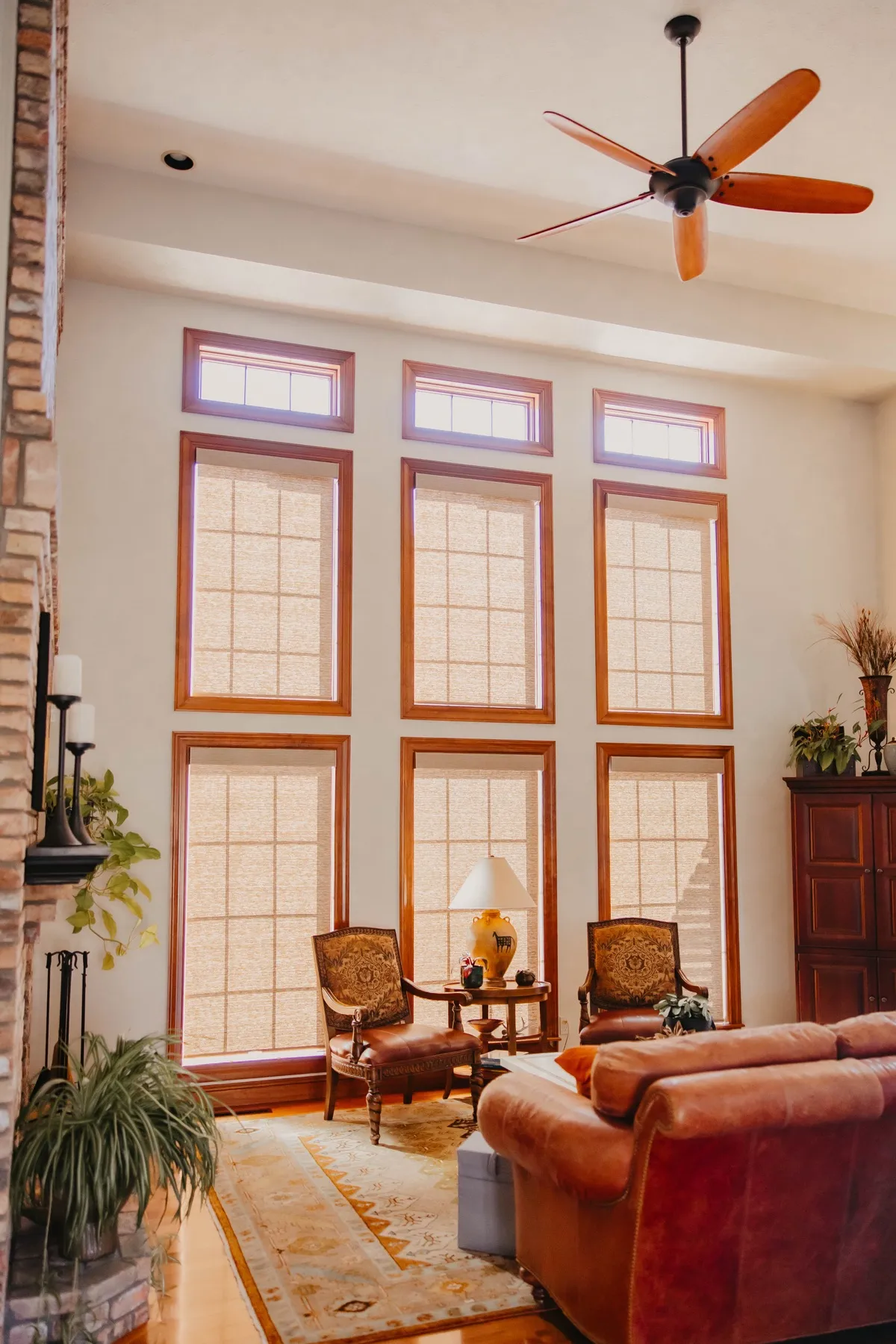
Some of the best solutions use two fabrics at once:
- Duolite® designs put a light-filtering and a room-darkening fabric in one headrail. Lower the first by day and the second at night.
- Top-Down/Bottom-Up lift lets you cover the bottom of a window for privacy while daylight comes in at the top. More in our Top-Down/Bottom-Up guide.
- Drapery over a shade adds a second level of darkness and warmth whenever you want it.
You can see this kind of layering in a neutral family home where drapery panels hang over light-filtering shades.
A quick guide by room
| Room | Most popular choice | Why |
|---|---|---|
| Living and family rooms | Light-filtering or sheer | Bright, soft daylight with glare control |
| Kitchens | Light-filtering or screen | Easy daylight, view of the yard |
| Bedrooms | Room-darkening | Privacy and darkness for sleep |
| Nurseries and media rooms | Blackout, edges covered | As dark as possible |
| Bathrooms | Light-filtering, Top-Down/Bottom-Up | Daylight with privacy |
| Home offices | Screen or light-filtering | Less glare on screens |
| Sunrooms | Screen or sheer | Keep the view, cut the heat |
Think about the outside of the house too
Every shade has a back side that faces the street. Many homeowners prefer a consistent look from outside, especially across the front of the house. Your designer can help you choose fabrics that do different jobs inside while looking tidy and uniform from the curb.
See them in your own light
The same fabric can look completely different at noon and at dusk, and a south window behaves nothing like a north one. That’s why our designers bring samples of every opacity to your home during a free consultation, and why every showroom has displays you can raise and lower yourself. Explore all the shade styles to start narrowing it down.
Common questions
What is the difference between room-darkening and blackout?
Room-darkening fabric blocks most of the light that hits it, so the room becomes dim. Blackout fabric blocks light through the fabric itself. With either one, some light can still show around the edges of the shade unless it's mounted outside the frame or has side channels.
Can people see through light-filtering shades at night?
Light-filtering fabric gives privacy during the day. At night with lights on inside, you may see shadows and shapes. For full night privacy in bedrooms and bathrooms, choose room-darkening fabric or add a second layer.
Which shade fabric is best for a living room?
Most living rooms do well with light-filtering or sheer fabrics, which soften daylight and cut glare without making the room dark. If the TV faces a sunny window, consider a screen fabric or a darker option for that window.
Can one shade be both light-filtering and room-darkening?
Yes. Duolite® options put two fabrics in one headrail, so you can lower a light-filtering fabric during the day and a room-darkening one at night.