
Media Room and TV Room Window Treatments
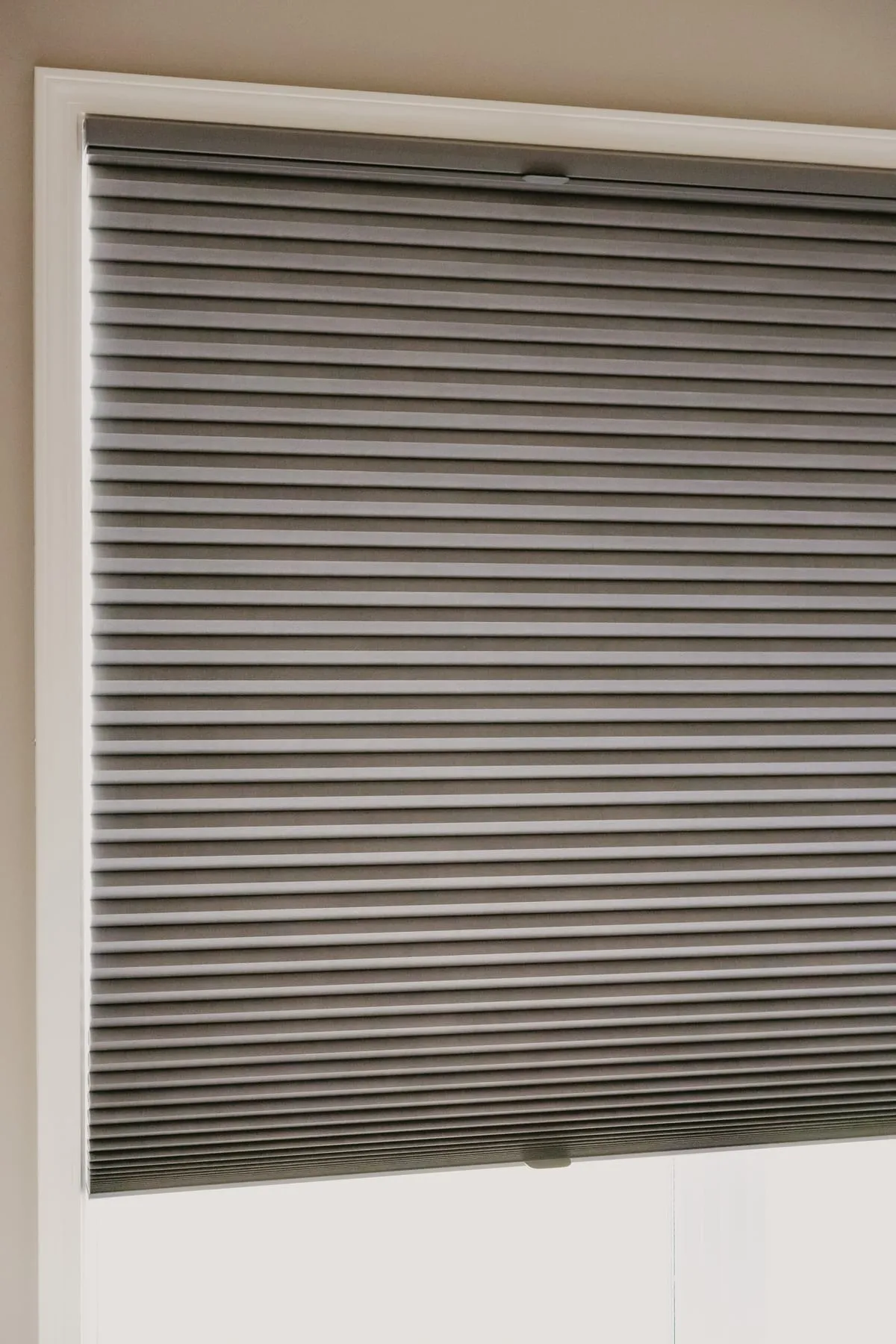
Whether it’s a dedicated basement theater or the family room where everyone watches the game, a room built around a screen has one enemy: light. Sun on the TV washes out the picture during the day, and light leaking around the shades spoils the mood at night.
Here’s how to plan windows for a media room or TV room that work for movie night and daytime alike.
Two different rooms
Start by deciding what kind of room you have:
- A dedicated media room or home theater is used mostly for watching. The goal is as dark as possible, whenever you want it.
- A family room with a TV is used for everything. You want daylight most of the time and glare control or darkness only when the TV is on.
The first calls for blackout and edge control. The second calls for flexibility.
For a dedicated media room
Blackout fabric
Designer Roller Shades in blackout fabric are a clean, simple choice. They roll up neatly out of sight and drop as one smooth panel.
Close the edges
Light around the sides of a shade is very noticeable in a dark room. Mount shades outside the window frame, choose side channels where available, or layer drapery over them. See inside vs. outside mount.
Layer drapery
Lined drapery over the shades gives the most complete darkness and adds a classic theater feel. Fabric also softens echoes, which helps rooms with hard floors.
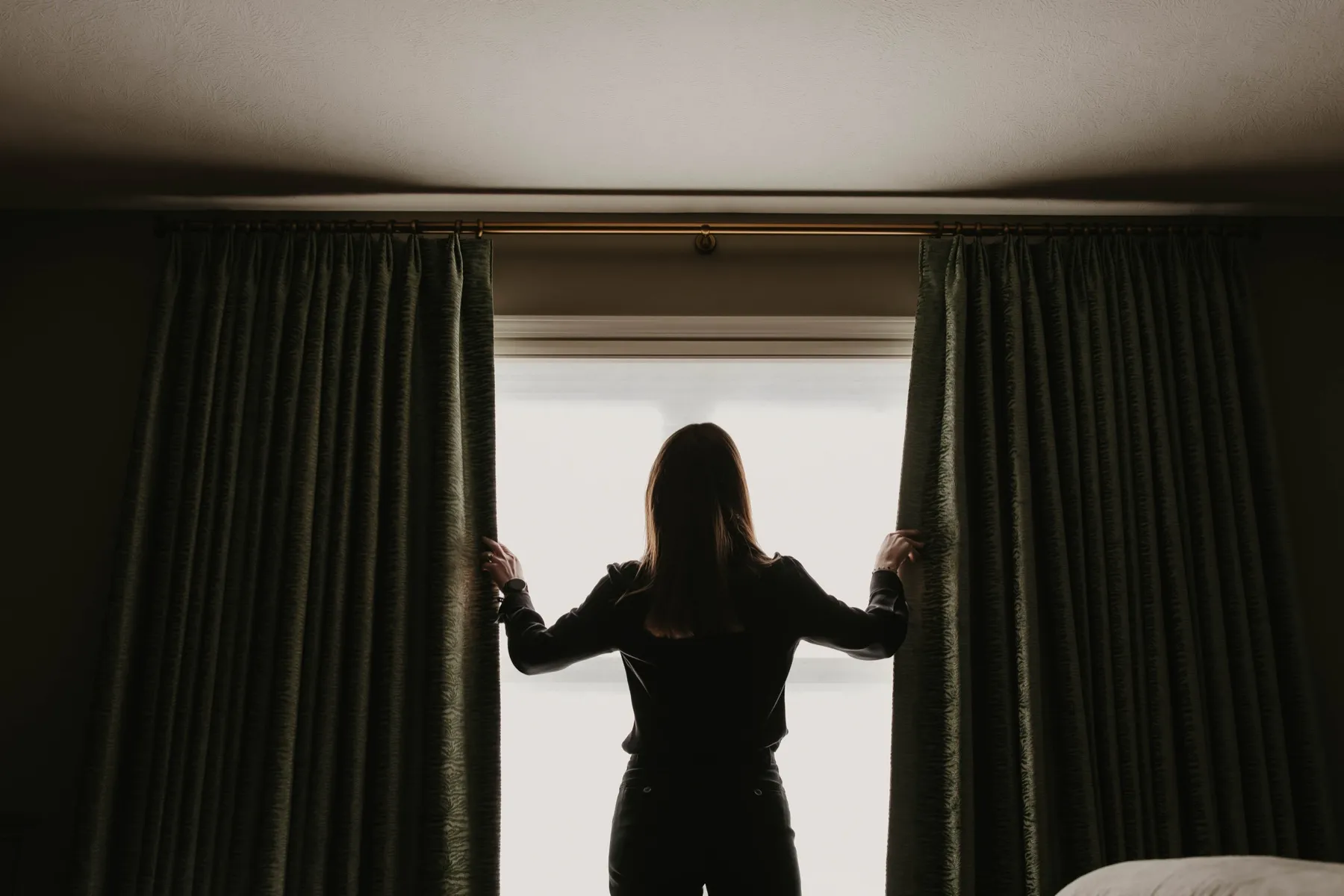
Designer tip: In a dark media room, choose a deep shade color. A white shade can glow when light hits it from outside, while charcoal, navy or deep gray disappears into the room.
For a family room with a TV
Cut the glare, keep the daylight
Designer Screen Shades cut glare and heat while keeping your view of the yard. Tighter weaves reduce more glare. They’re often all you need for afternoon TV.
Soft shadings
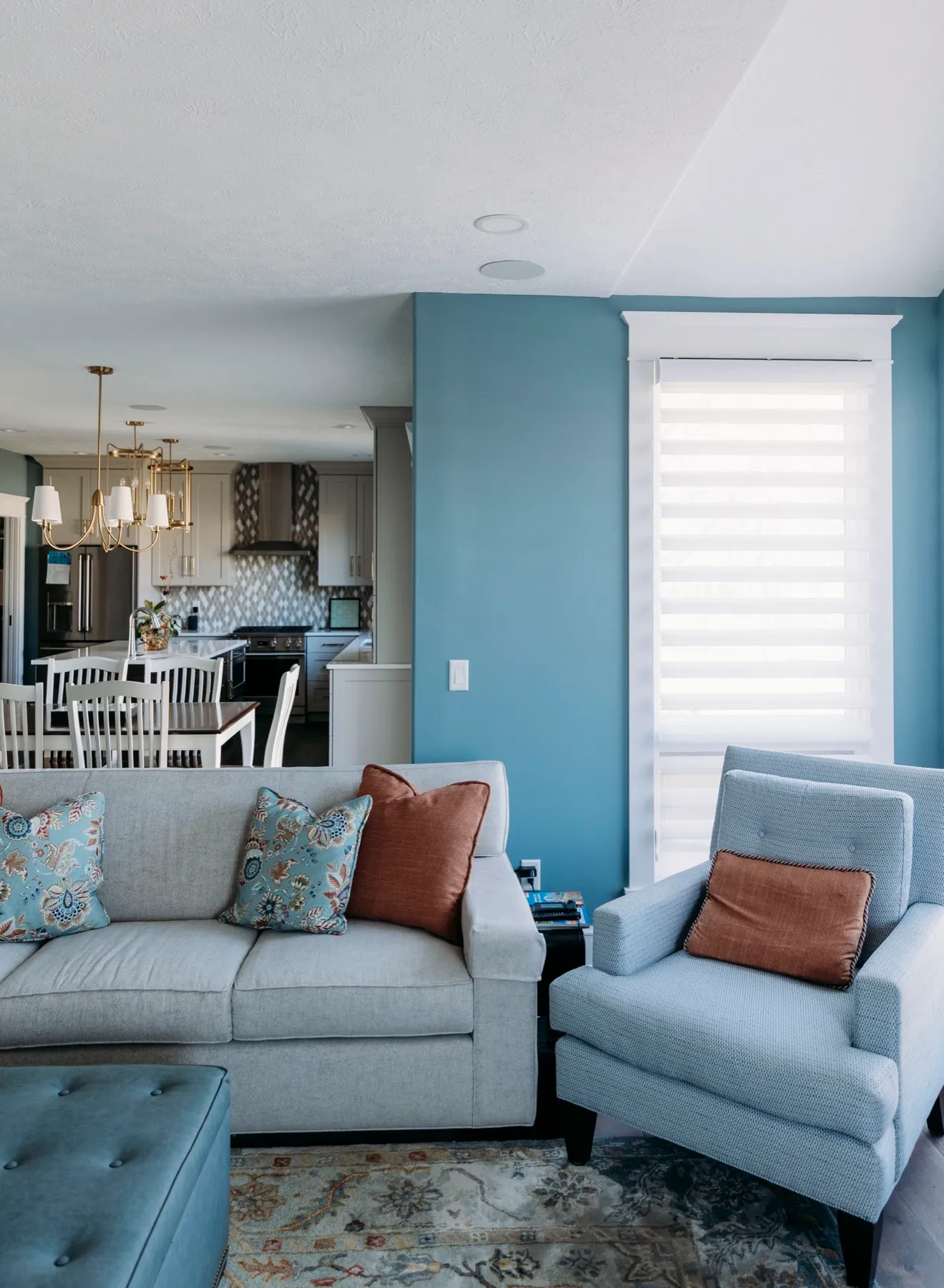
Silhouette® Window Shadings and Pirouette® Window Shadings soften daylight, and you can tilt the vanes closed when the sun moves onto the screen. For more darkness, Silhouette Duolite® adds a room-darkening roller shade behind the shading.
Two fabrics on one window
Duolite® designs put a light-filtering and a room-darkening fabric on the same shade. Use the light one during the day and the dark one for movies. Our guide to light-filtering vs. room-darkening vs. blackout explains the options.
Motorization: the finishing touch
Nothing makes movie night easier than lowering every shade with one tap. With PowerView® Automation:
- A scene can lower every shade in the room at once.
- A remote or keypad keeps control by the sofa.
- Voice control works with popular voice assistants.
- PowerView works with popular smart-home systems, so shades can be part of a movie scene with your lights.
It’s especially useful when the TV room has tall or hard-to-reach windows. See our beginner’s guide to motorized shades.
Don’t forget doors and basements
- Sliding doors in a family room need a covering that clears the opening. See the best window treatments for sliding glass doors.
- Basement theaters often have small or high windows, which are easy to darken completely. Our guide to basement window treatments has ideas.
Plan your movie room
Every TV room has a different sun angle and screen position. During a free in-home consultation, your designer will look at where the light hits the screen and bring samples to test. You can also try motorized shades in our showrooms.
Common questions
What is the best window treatment for a media room?
A blackout or room-darkening shade that closes the light gaps at the edges, often with drapery layered over it. Motorization lets you lower everything with one tap when the movie starts.
How do I stop glare on my TV during the day?
Solar screen shades or sheer shadings cut glare while keeping some daylight. For full darkness, lower a room-darkening or blackout shade on the windows facing the screen.
Can shades be part of a movie scene with the lights?
Yes. PowerView® Automation works with popular smart-home systems, so shades can lower as part of a scene. Your designer can tell you what works with your setup.
Do drapery panels help with sound?
Fabric softens echoes in rooms with hard floors and bare walls, so drapery can make a TV room feel and sound more comfortable.