
Cornices and Valances: Finishing a Window from the Top
The top of a window is easy to overlook until something is wrong with it. A shade headrail that shows, drapery hardware that looks unfinished, or a window that seems short for the room are all problems at the top. A cornice or valance takes care of all three.
Cornice or valance?
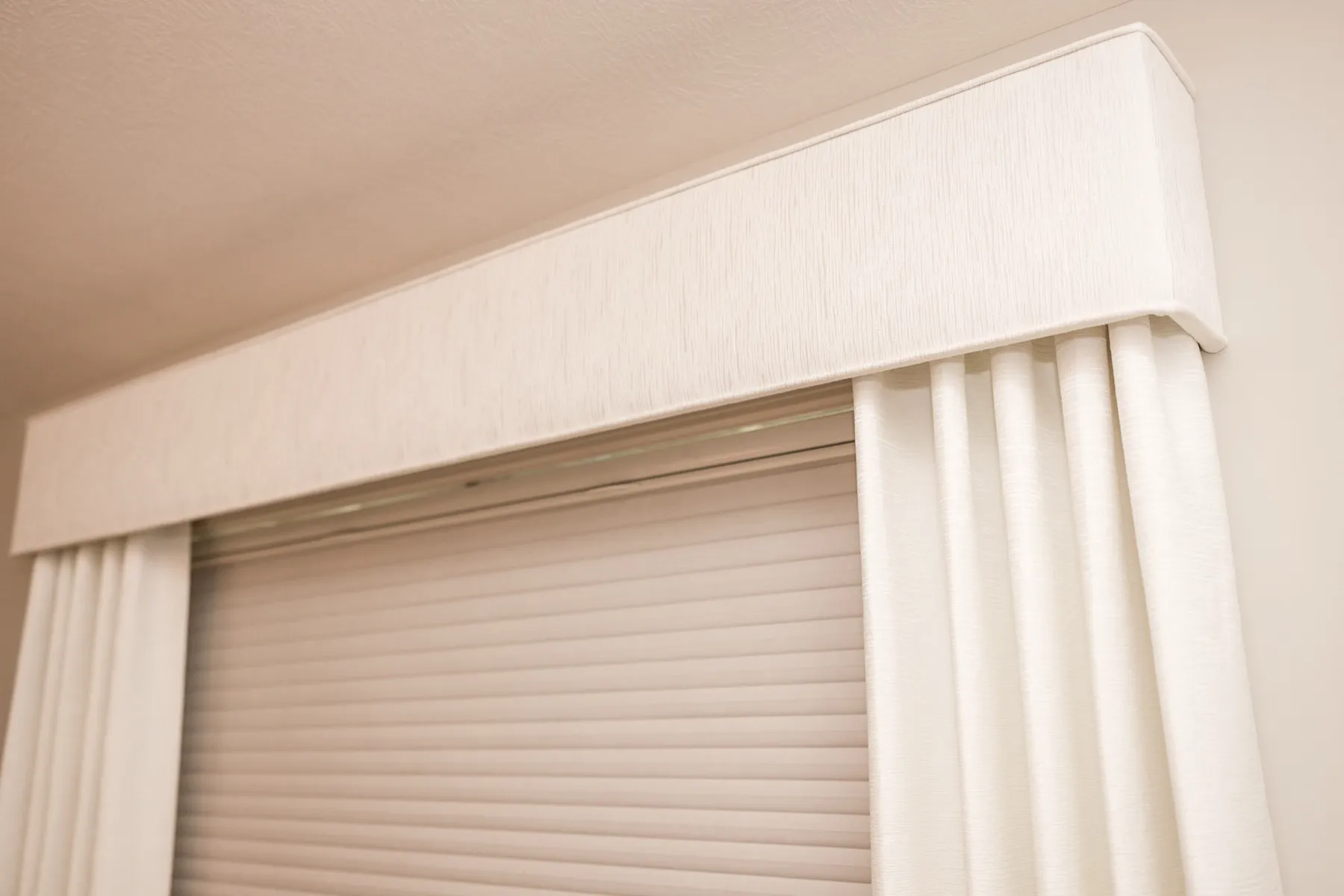
A cornice is a box that covers the top of the window. Usually it’s a board wrapped in fabric, with clean edges and a crisp shape. It reads as part of the architecture.
A valance is fabric hung across the top of the window. It can be gathered, pleated, swagged or flat. It’s softer and more decorative than a cornice.
Both hide the hardware at the top of a shade or blind, and both give the window a finished look. Which one is right comes down to the style of the room.
The bedroom in these photos
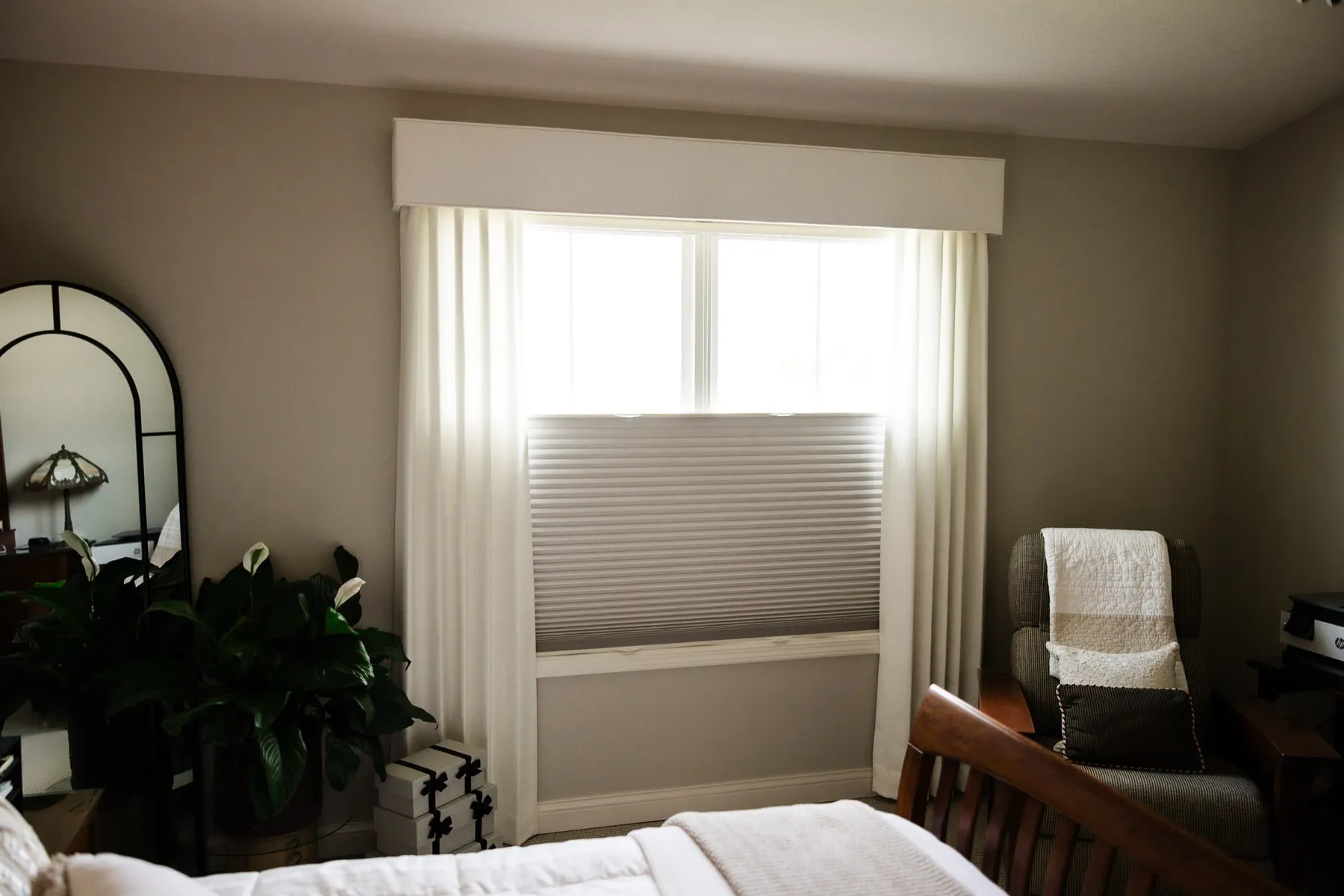
The photos here are from a bedroom we did in 2025. The window got three layers:
- A pleated shade inside the frame for privacy and light control.
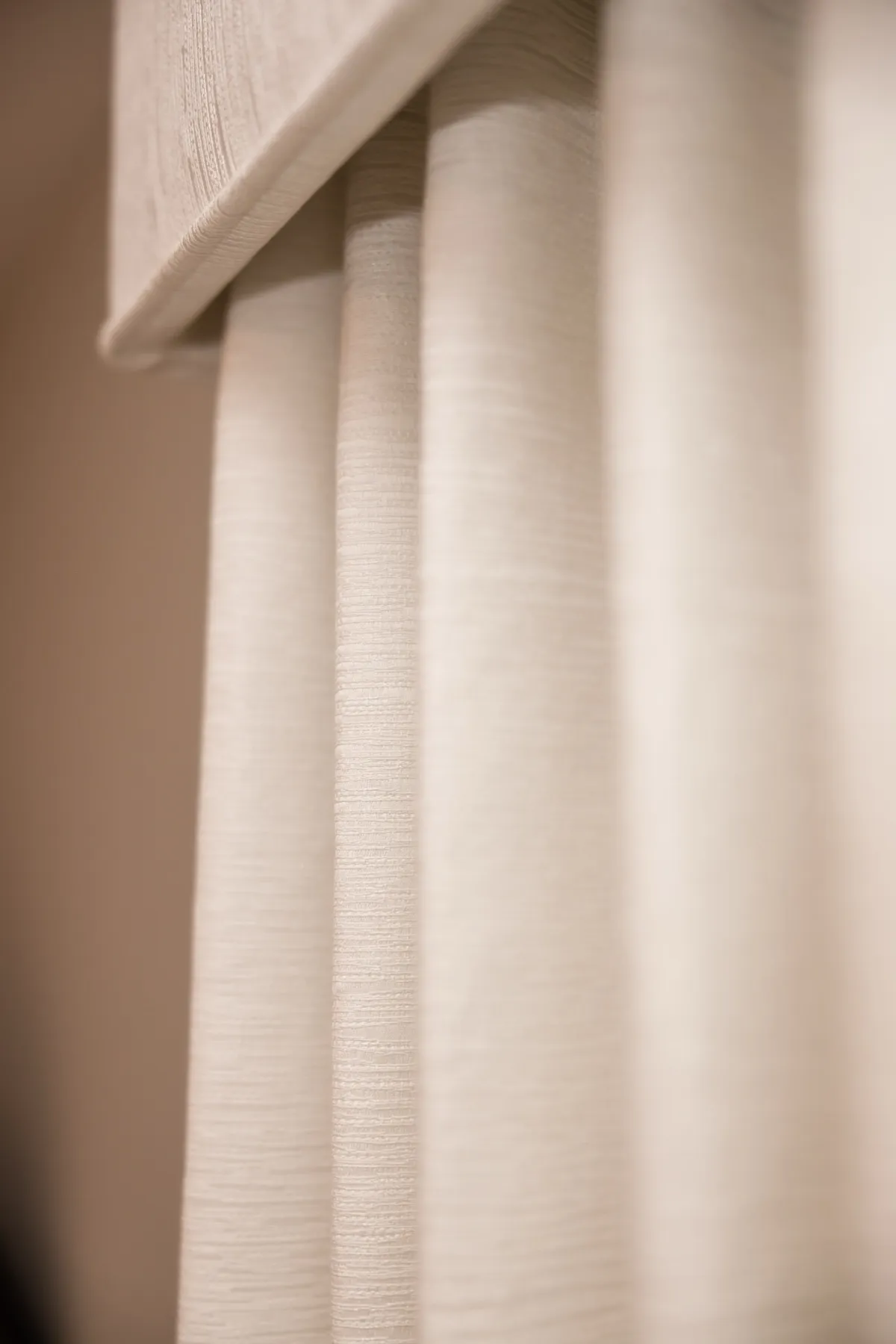
- Drapery panels on each side, in a textured white fabric.
- A fabric-wrapped cornice across the top that ties it together and covers the shade’s headrail and the drapery hardware.
On its own, the shade would have been practical. With the cornice and panels, the window becomes the frame for the whole wall. That’s what you see in the wide shot at the bottom of this post.
Getting the proportions right
Most of what makes a cornice look good is measurement.
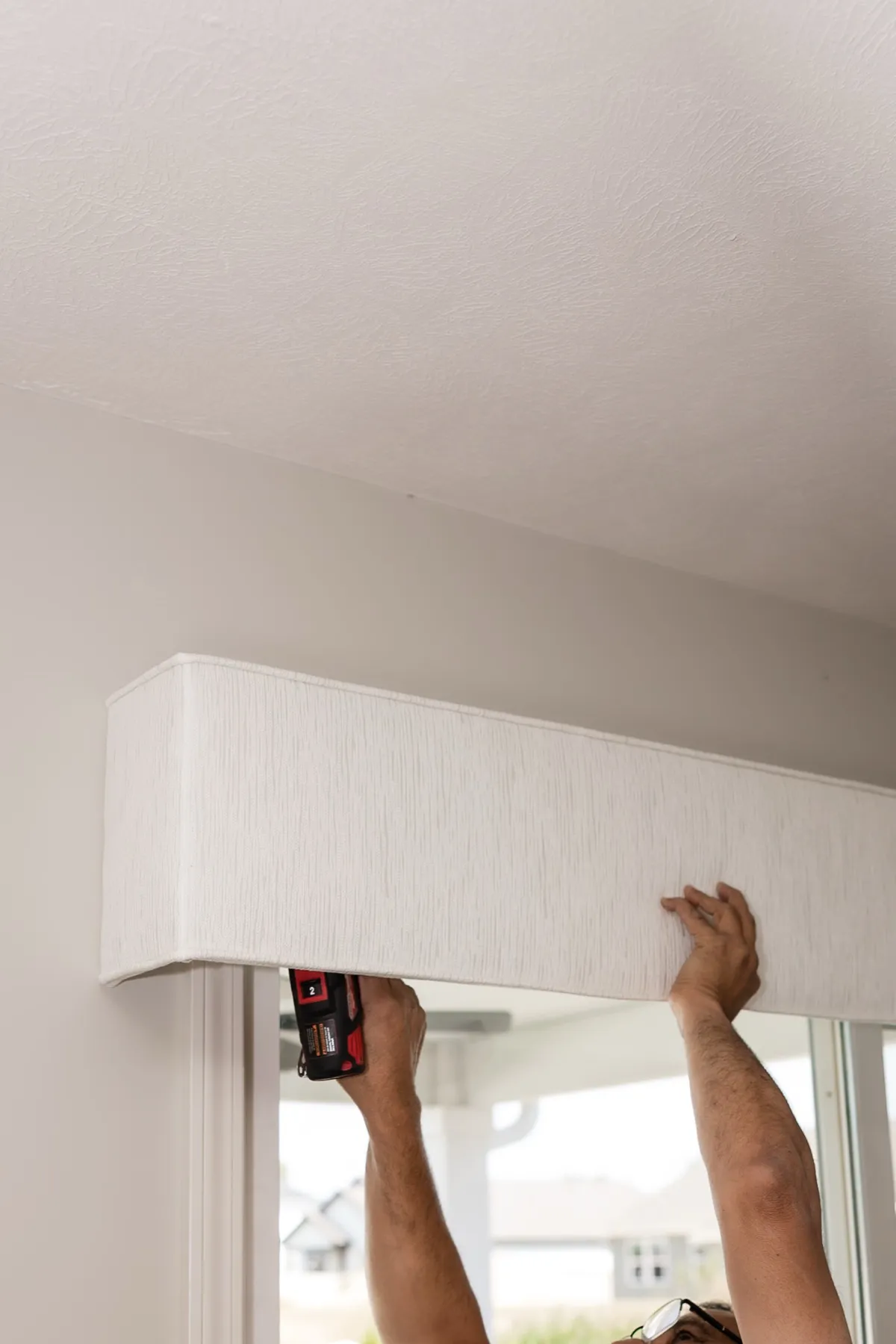
- Go higher than the window. Mounting the cornice a few inches above the frame makes the window, and the ceiling, look taller.
- Go wider when there’s drapery. If panels hang beside the window, the cornice has to cover their hardware and still clear the shade. That usually means extending past the frame on both sides.
- Mind the depth. The cornice has to stand out far enough to clear the shade and the drapery, but not so far that it looks bulky. This matters even more with motorized shades.
- Keep the face in proportion. A tall face on a short window looks heavy. Your designer will size it to the window and the ceiling height.
Picking the fabric
Most cornices are covered in the same fabric as the drapery, or in a solid that picks up one color from it. A plain, textured fabric (like the one here) keeps the look calm. A pattern on the cornice makes it a feature. If the room already has a lot going on, keep it simple.
For more ideas on combining layers, see layering drapery and shades and our bedroom window treatments guide.
Where they make the most sense
- Bedrooms and living rooms, where a dressed window suits the room.
- Windows with shades that have a visible headrail.
- Rooms with low ceilings, where a high-mounted cornice adds height.
- Mismatched windows, where a row of cornices at the same height lines everything up.
Cornices, valances and drapery are all made to order. See the options on our drapery page, or book a free in-home consultation and we’ll bring fabric samples and measure for the look you want.
Common questions
What's the difference between a cornice and a valance?
A cornice is a firm, box-shaped top treatment, usually a board covered in fabric. A valance is softer: fabric that's gathered, pleated or draped across the top of the window. People use the words loosely, so bring a photo of the look you like.
Do I need drapery with a cornice?
No. A cornice looks finished on its own over a shade. Side panels add height and softness, and they're worth it in bedrooms and living rooms where you want a fuller look.
Can a cornice go over motorized shades?
Yes. The cornice sits in front of the shade's headrail and hides it. We plan the depth so the shade and its motor have room to work.