
Roman Shades vs. Roller Shades: How to Choose
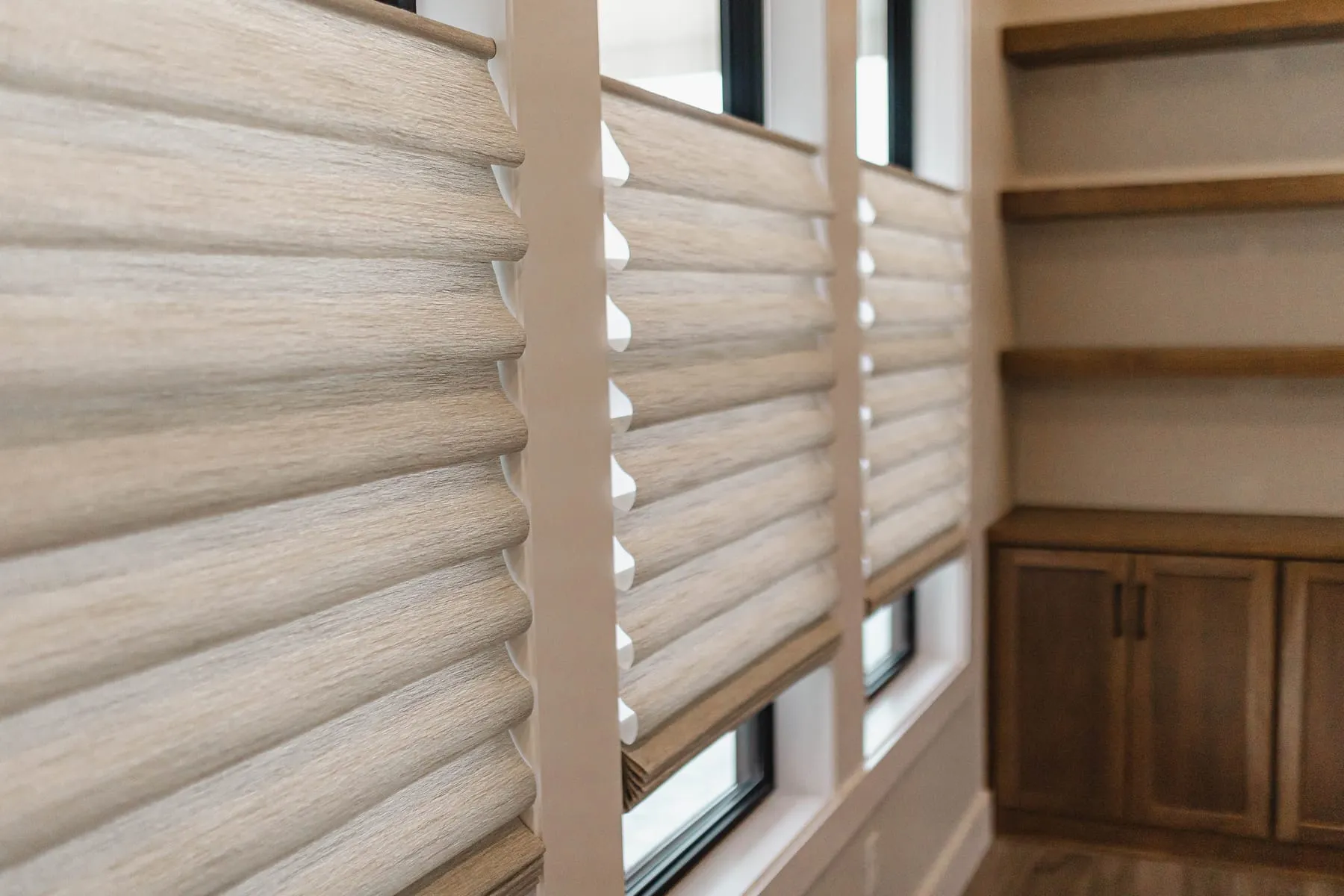
Roman shades and roller shades are two of the most popular choices we install, and they look completely different on the window. One is soft and tailored, the other is clean and minimal. If you’re torn between them, here’s how they compare.
The short answer
- Choose Roman shades when you want softness, texture and a decorated, finished look. They work beautifully in living rooms, dining rooms and bedrooms.
- Choose roller shades when you want a clean line, a slim profile and easy upkeep. They’re a natural fit for kitchens, offices, bathrooms and modern rooms.
How they work
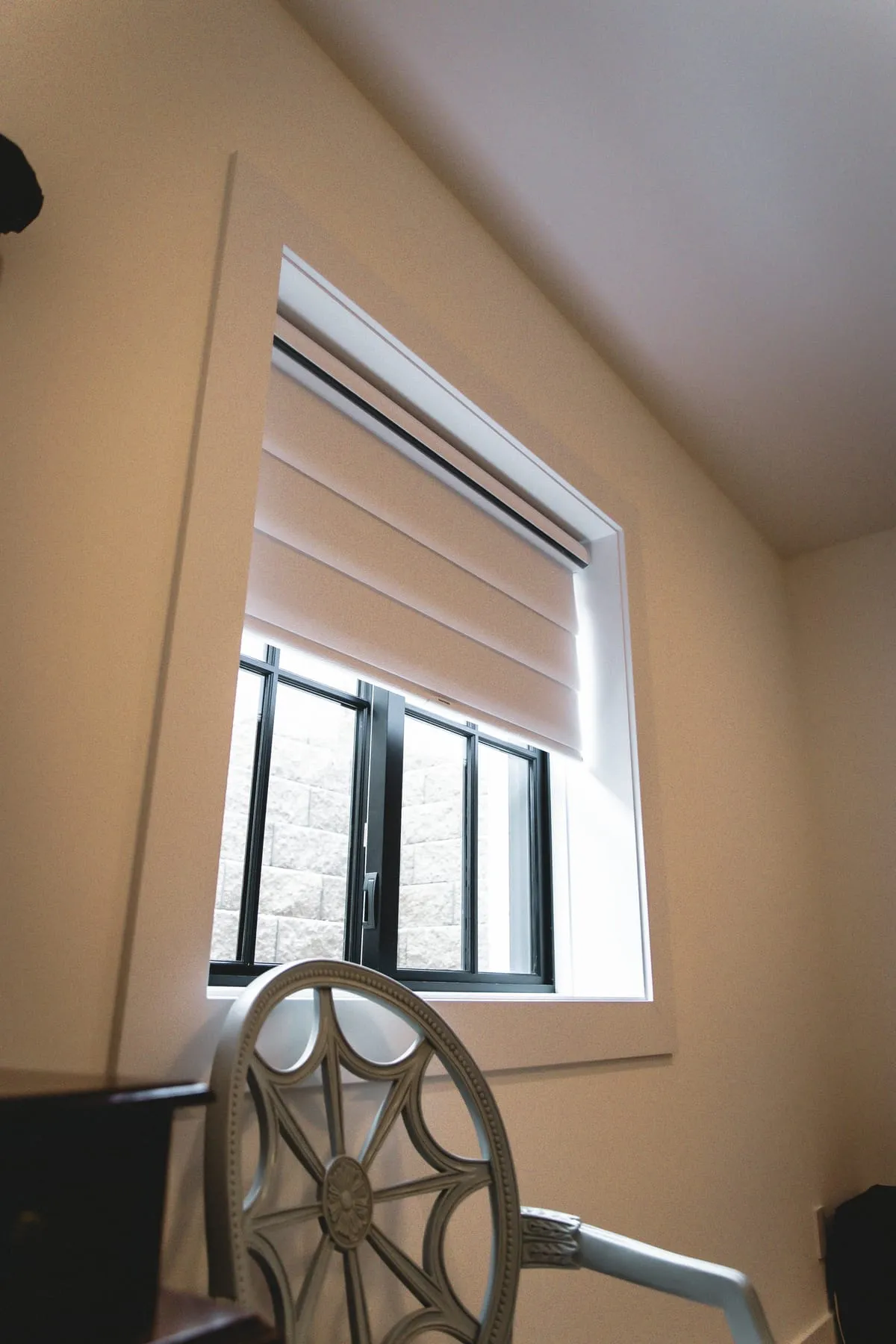
A Roman shade is fabric that gathers into horizontal folds as it rises. Depending on the style, the folds can stack flat and crisp or drape in soft, rounded loops. When it’s lowered, you see a smooth panel of fabric, often with a seam or fold line that adds detail.
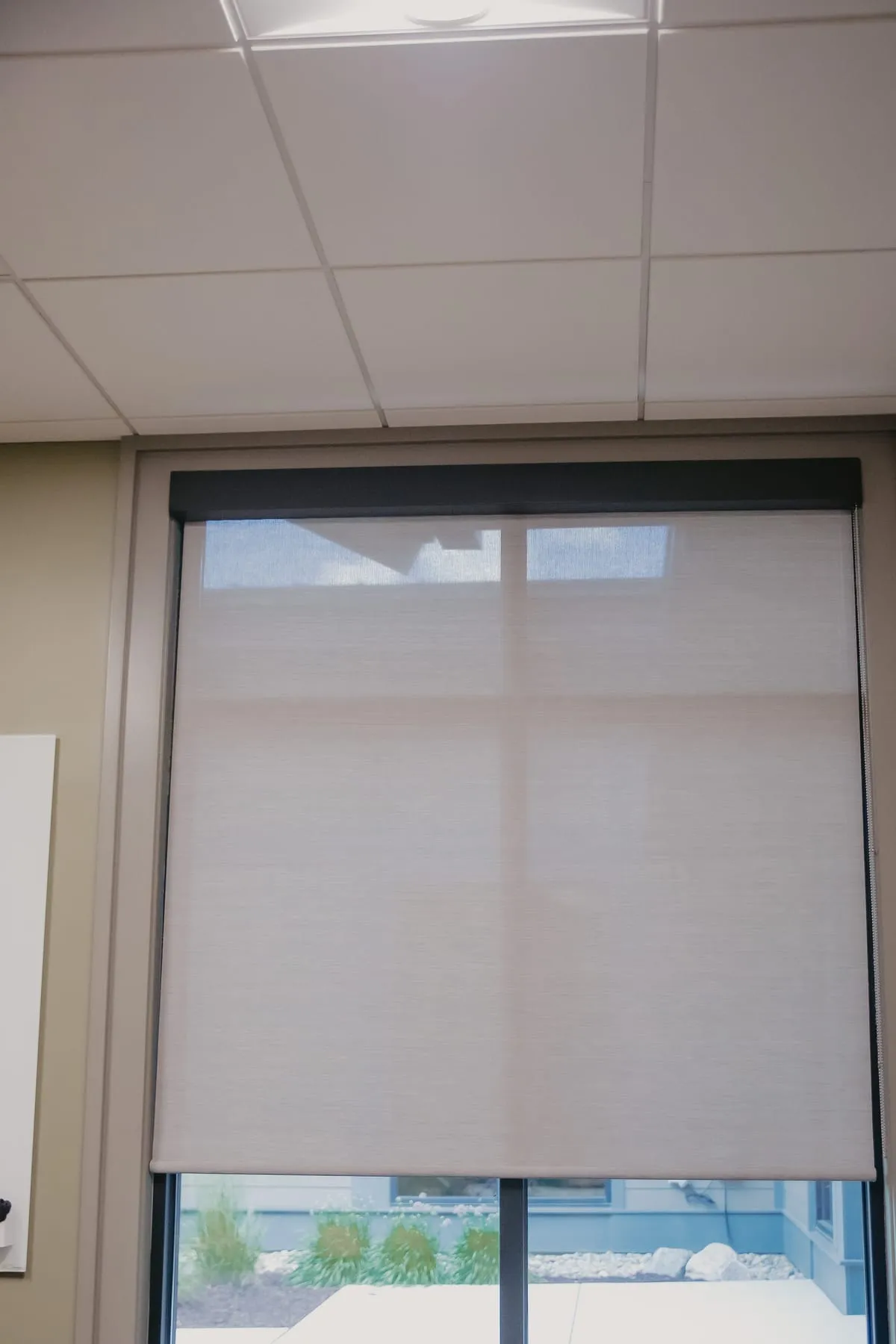
A roller shade is a single panel of fabric that rolls up onto a tube at the top of the window. Raised, it nearly disappears; lowered, it’s a flat, clean sheet of color or texture.
Side by side
- Look: Roman shades add pattern, folds and dimension. Roller shades are calm and simple, letting the room and the view lead.
- Light control: Both come in light-filtering and room-darkening options. Roller shades also come in screen fabrics that cut glare while keeping your view.
- Stack when raised: Roman shades keep some fabric at the top of the window when fully raised. Roller shades roll up tight, so more glass shows.
- Fabric choices: Roman shades shine with textured weaves, linens and patterns. Roller shades range from solid colors to woven textures and sheer screens.
- Upkeep: Roller shades are the easiest to dust. Roman shade folds take a little more care.
Options worth knowing
On the Roman side, Vignette® Modern Roman Shades roll up into a headrail instead of stacking, so you get the soft folds without the bulk at the top. Carole® Roman Shades offer a classic, tailored look in a wide range of fabrics.
On the roller side, Designer Roller Shades come in a wide range of fabrics and opacities, and Designer Screen Shades cut glare and UV while keeping your view outside.
See all the options on our Roman shades and roller shades pages.
Room by room
- Living room: Roman shades for warmth and texture, or roller shades layered with drapery. More in our living room ideas.
- Kitchen: Roller shades, especially near the sink, where a simple panel is easiest to keep clean.
- Bedroom: Either, in a room-darkening fabric. See bedroom window treatments for better sleep.
- Home office: Screen roller shades to cut glare on screens. See home office window treatments.
- Dining room: Roman shades for a dressed, finished look.
Designer tip: If you can’t decide, look at what’s already in the room. A room with lots of clean lines and hard surfaces often welcomes the softness of a Roman shade, while a room full of pattern and texture can feel calmer with a simple roller shade.
See both in person
Fabric is the deciding factor for most people, and it’s hard to judge on a screen. Visit one of our showrooms to see both styles side by side, or book a free in-home consultation and your designer will bring samples of both to hold up at your own windows.
Common questions
Are Roman shades or roller shades better for a bedroom?
Both can work. Roman shades add softness and come with room-darkening liners, while roller shades come in blackout fabrics and fit neatly inside the window frame. Many bedrooms pair a roller shade with drapery for the darkest result.
Which is easier to clean?
Roller shades are usually the easiest: a flat panel of fabric that can be dusted or vacuumed with a brush attachment. Roman shades have folds that collect a little more dust.
Can Roman and roller shades be motorized?
Yes. Many Hunter Douglas Roman and roller shades can be ordered with PowerView® Automation, so they raise and lower with a remote, keypad, app or schedule.
Can I use both styles in the same house?
Absolutely. A common approach is roller shades in kitchens, offices and bathrooms, and Roman shades in living rooms, dining rooms and bedrooms, chosen in colors that feel related from room to room.